


Blackjack is widely played across online and brick-and-mortar casinos the world over. The game emerged several centuries ago but has undergone multiple changes to become what it is today, making it one of the select few casino games where the player can actually gain an edge over the house through skill, optimal decisions, and advantage play.
Blackjack is also an appealing option for recreational players since its rules are quite easy to learn and follow even if one lacks substantial experience at the tables. In the last decade or so, the game of Twenty-One has gained huge popularity among online players as well, with numerous exciting variants being offered across a great number of interactive casinos.
Playing blackjack on desktop or mobile devices is a straightforward process and a highly recommended option for beginners until they become better acquainted with the intricacies of this enticing card game. The following guide aims at introducing players to some key points concerning blackjack’s rules, strategies, and online play.
Basic Rules
 Blackjack is a comparison card game in which players compete against the house, that is, the casino croupier. Each gambling venue has set up its own blackjack rules, which for the most part agree with those of other establishments on the pivotal points but may differ considerably in the details.
Depending on the variation, there can be anywhere between one and eight full 52-card decks in play. In games where one or two decks are used, the cards are usually dealt face down but multiple-deck games utilize a shoe, where all cards are placed to reduce the time between shuffles.
Before the game starts, the dealer shuffles the decks and a player cuts the pack. The dealer then removes or “burns” the top card from the pack and places it either in the discard tray or at the bottom of the deck, depending on the number of decks in play. Players then place their chips in the betting boxes on the layout, and the game can commence.
Blackjack Additional Basic RulesThe deal starts in a clockwise direction, with the player immediately to the dealer’s left receiving the first cards. The dealer receives one face-up card and one hole card. The goal of each player is to form a hand with a total that is higher than the dealer’s and as close to 21 as possible without going over.
All face cards are assigned a value of 10; the Ace counts either as 1 or 11, and the remaining cards retain their face value. A starting hand that consists of a ten-value card and an Ace is called a natural or blackjack and offers the highest payout. If the player obtains a blackjack and the dealer does not, the player receives one and a half times their initial bet. If the reverse occurs and the dealer has a blackjack but the player does not, the player loses the initial bet. Whenever both are dealt naturals, they push and no money changes hands.
Players who are not dealt a natural must evaluate the strength of their hand and choose between several actions. If the total can be improved, the player can choose to hit and receive additional cards. If they determine their starting hand is already strong enough, they can decline additional cards and stand.
Once everyone at the table has acted on their hands, the dealer flips over the hole card and plays the hand according to predetermined house rules. In most instances, dealers draw to a total of 16 and stand on 17, but the rules vary between venues. Players win whenever they obtain a higher total than the dealer, or the dealer busts, i.e., goes over 21. Conversely, players lose whenever they bust or hold a lower total than the dealer.
Sometimes a player receives a pair on the initial deal. Players may split the pair into two separate hands, but dealers are not allowed to split. These two hands are then played separately, one after the other, and an additional bet is made to cover the second hand. At some tables, players are prohibited from splitting pairs of Aces, which works to their disadvantage and gives the house edge a 0.06% boost.
Additional Rules
As mentioned briefly, there may be huge discrepancies in terms of rules in different gambling establishments. For example, some blackjack games allow players to split only certain pairs. Discrepancies in the fixed rules the dealers follow may also be observed, as sometimes dealers are required to hit on soft 17, which gives the house a slightly bigger edge over players.
Various additional rules may apply to the game’s payouts and to doubling down, taking insurance, or surrendering one’s hand. We will touch upon these in more detail below.
Payouts
In blackjack, all winning hands with the exception of naturals return even money, which means the player’s profits are equal to their initial bet. For example, if you prevail over the dealer with a higher hand total and originally staked $10, your winning hand will return $20, for a net profit of $10.
Double Down
In addition to hitting or standing, blackjack players may double down, but this option involves placing a side bet that may equal the amount originally staked. This is called a full double down. Players can also choose to double down for less than their original bet.
Payouts Additional TipsNaturals are the most profitable hands to obtain, as they return at a rate of 3 to 2, which means the player gets back one and a half times their stake. Thus, if you bet $10 and are dealt a blackjack, you will receive $15 in winnings plus the return of your $10 stake, for a total of $25 and a net profit of $15.
The majority of online casinos pay 3 to 2 on naturals, but many land-based gambling establishments have introduced blackjack tables where the payout on this hand is adjusted to 6 to 5. Inexperienced players fail to notice this detail, but it is of utmost importance since this reduction in blackjack payouts boosts the house edge by around 1.4%. No experienced blackjack player would ever agree to take a seat at a 6-to-5 table.
Double Down Additional TipsMany experts recommend either doubling down for the full amount of your bet or not doubling down at all. Once the side bet is made, the player receives only one more card to add to the two-card hand. At some blackjack tables, players are allowed to double down only on specific two-card totals, such as 9, 10, and 11. At others, doubling down is not allowed after splitting pairs, but such restrictions usually apply whenever blackjack pays 6 to 5, which should be avoided anyway.
Some players mistakenly assume the goal of a double down is to improve one’s hand total. It is not. Players double down so they can increase the amount of money they can potentially collect when the dealer is in a weak position.
Insurance
Whenever the dealer’s face-up card is an Ace, players may make a proposition bet to insure their hand against a potential blackjack by the dealer. This side bet is called insurance and involves the player making a wager that amounts to half of the initial stake.
Surrender
At some tables, players are granted an additional option called surrender. Whenever a starting two-card hand offers little promise, the player is allowed to forfeit the cards in exchange for half of the bet. This resembles folding in poker, but in blackjack players at least get to retain half of their stakes when surrendering.
Insurance Additional TipsOnce the chips are placed within the insurance box, the dealer checks for a natural, and if a ten-value card is indeed in the hole, the insurance will pay 2 to 1 to the player while the initial bet loses. The player breaks even and does not lose any money on the original hand. However, if the dealer does not have a natural, the player will act on the hand as usual but will lose the insurance bet.
Opinions within the blackjack community differ on whether to accept insurance. Some argue insurance is a losing bet for recreational players because the dealer’s chances of being dealt a blackjack are not that great. However, a player who holds a natural should always accept insurance. Another general rule states never to insure weak starting hands.
Surrender Additional TipsThere are two variations of this rule depending on the gambling venue. Some casinos allow for the so-called “early surrender,” where the player may forfeit the hand before the dealer checks the hole card for a natural. Early surrender clearly works to the player’s benefit.
Many blackjack tables incorporate the “late surrender” rule, where the dealer first checks the hole card for a blackjack and then allows players to forfeit their hands. If the dealer holds a natural, they simply reveal the hole card, and surrender is no longer an option because the player automatically loses the entire bet. Thus, late surrender gives the house a slightly higher edge than early surrender, which is why it usually prevails at tables where this option is allowed.
Soft and Hard Hands
An important distinction is to be made between soft and hard hands in blackjack. Hands that contain an Ace that can be assigned a value of either 1 or 11 are called soft hands. When a player is dealt a soft hand, they are in a better position than the dealer since the odds of going bust with such a hand by drawing a third card are nil. In such cases, the dealer would refer to a soft hand total as “3 or 13,” “5 or 15,” and so on, to remind the player that they assign the Ace’s value.
Push
Whenever both player and dealer have the same totals, they tie or “push,” in which case the player is returned the initial wager. Nobody wins or loses anything and no money changes hands. There may be deviations from this rule. In some blackjack variations, the dealer takes all ties with the exception of naturals. At first glance, this might not seem like a big deal but it will have a pronounced negative impact on one’s bankroll over time.
Soft and Hard Hands Additional TipsSoft 19 and Soft 20 are two exceptions where it is not recommended to double down or hit for additional cards. These are already in the safe zone, so it is best to leave them alone altogether.
Hands with no Ace or with an Ace that must count as 1 are called “hard” or “stiff” because the chances of exceeding 21 on the next hit are greater. Note that Ace-less hands totaling 11 or below are not considered hard because they will not cause the player to go bust by requesting a third card.
Starting hands with hard totals 12 through 16 are often called “breaking” hands by professional blackjack players because another hit is likely to lead to a bust. When the dealer holds an up card with a value of 2 through 6, they also hold a breaking, or weak, hand. When both player and dealer are dealt breaking hands, the general recommendation is to stay on your total and let the dealer take the next hit.
Push Additional TipsTables where dealers win on ties are rarely seen online or in Las Vegas and Atlantic City casinos. This rule variation usually applies on cruise ships where gambling is not the main source of profit or during charity events. Of course, if one partakes in a charity event, they may simply consider forfeiting their chips on ties as a donation. Other than that, tables where this rule applies are to be avoided as it boosts the house edge to a shocking 9.5%.
Blackjack Types
The game of blackjack has greatly evolved over the centuries and many new variants have sprung into existence, especially in more recent years following the emergence of interactive casinos. Each variant comes with its oddities, rules, and side bets. Some of the most commonly played blackjack variants are covered in brief below.
Blackjack Surrender

This is one of the most popular blackjack variations, deriving its name from the surrender rule, allowing players to forfeit half of their initial stake when folding a hand.
Perfect Pairs

Perfect Pair is a fun blackjack variant where players can diversify their session by placing side bets on whether they (or the dealer) will receive a pair on the initial deal.
Blackjack Surrender Additional TipsOther than that, players can choose from the standard options of hitting, standing, splitting pairs, doubling down, and insuring their hands when the dealer shows an Ace. In some online variants, like Blackjack Surrender by Playtech, the dealer also checks for a blackjack whenever a ten-value card is showing.
Perfect Pairs Additional TipsThe pairs that qualify for a payout include mixed pairs (5 to 1), colored but off-suit pairs (10 to 1), and suited pairs (30 to 1). Note that the payouts for the side bets may differ depending on the casino or the software developer providing the online game. Many experienced players abstain from making side bets on pairs because these carry roughly a 6% advantage in favor of the house.
Pontoon

Pontoon is a derivative of blackjack that is prevalent in the United Kingdom and Australia. In this version, a natural is referred to as “pontoon,” which is where the game derives its name.
Double Exposure

Double Exposure is a popular form of blackjack where both cards the dealer receives on the initial deal are exposed. Since this works to the benefit of the players, several adjustments have been made to neutralize the advantage against the house.
Pontoon Additional TipsAnother essential peculiarity of this variant is a five-card trick whereby a player obtaining a five-card total of 21 or less is awarded the highest payout.
This somewhat resembles the Charlie rules in some blackjack variations, where drawing five, six, or seven cards without busting results in an automatic win for the player regardless of the dealer’s hand. In Pontoon, hand totals of 21 made with three or four cards beat all other hands except the pontoon and the five-card trick. Another difference is that in Pontoon, the dealer takes all ties.
The names of the actions following the deal also differ from those used in standard blackjack. Requesting additional cards is called a “twist,” and when declining more cards, the player says “stick.” When the player’s total is less than 21, they may choose to increase the initial stake by an amount that is either equal to or twice the original bet. Keep in mind that in Pontoon the dealer receives the two cards face down.
Double Exposure Additional TipsFor example, the dealer takes all ties in Double Exposure except for ties on naturals. Players are not allowed to re-split pairs and are paid even money on blackjacks.
Blackjack Switch

Blackjack Switch is one of the most engaging blackjack variants since it offers players an interesting twist. The main difference here is that one is actually dealt two hands. The player is then presented with the option to switch the top cards to improve both hands. Therefore, the player can win or lose with either or both hands. Other than that, some online variants you can play for real money involve several side bets, with players able to wager that they will be dealt a pair, a set, two pairs, or four of a kind.
Choosing a Blackjack Casino
Nowadays, blackjack fans can enjoy their favorite game on desktop and mobile devices, with hundreds of online casinos offering numerous variants at their fingertips. Those who are considering switching from land-based to online play should take into account the following criteria when selecting an online casino at which to play blackjack.
Bonuses for Blackjack

One of the easiest ways to increase your chances of turning a profit when playing blackjack online is by taking part in different promotional incentives and claiming various bonuses, starting with the welcome packages all newcomers receive upon signing up with real-money accounts and depositing for the first time.
Security

Security is an important aspect to consider when playing online because you are risking not only your money but also your personal and financial information. The first thing you need to check when an online casino catches your eye is its license and the authority that regulates it.
Bonuses for Blackjack Additional TipsAs a game with acceptable volatility and a very low house edge, blackjack is a great option for playing with bonus credits where allowed. Fans of the game can take advantage of various promotional incentives, including cashback, sign-up, and reload bonuses. Just be sure to check the terms and conditions of any blackjack bonus to ensure the game is not excluded from bonus play.
Security Additional TipsIf the casino is licensed and regulated by a renowned regulatory body, you can rest assured you will always have somebody to protect your best interest. If your casino of choice has published no licensing information on its website, do not bother registering there.
A licensed and regulated gambling operator is obliged by its regulators to process all payments in line with established security standards in the industry. All information you share on its website will be encrypted with secure SSL technology to protect it against fraud and misappropriation.
Payouts

The average return of the available blackjack games also needs to be taken into account. Note that when playing online, the outcome of each round is determined by a special software called Random Number Generator (RNG).
Game Variety

Versatility in terms of titles may prove to be more important than many players realize. If you are a blackjack fan, the best course of action is to choose an online casino that offers a wide range of blackjack variations, preferably from several software developers.
Payouts Additional TipsTo ensure randomness of results and hinder advantage players, the cards are returned to the shoe and the entire pack is freshly reshuffled after every single hand. The higher the theoretical percentage of an online blackjack variant, the better for the player.
For example, the average payout percentage of Microgaming’s Classic Blackjack at one online casino is listed as 99.50%, which means players would lose only $0.50 and collect $99.50 on average per every $100 they stake. These results are accurate only over the long term, but they still matter, especially if you play frequently. It would be better to opt for the above-mentioned blackjack variant rather than choose a game where the average return is estimated at only 94.30%, don’t you think?
Game Variety Additional TipsThis will prevent you from growing bored soon after registration. If you choose an online casino where only one or two variants are on offer, you are guaranteed to start looking for another operator within a week. Selecting an online casino with live dealer games, broadcast in real time, is also highly recommended.
Winning at Blackjack
Because blackjack is a game of dependent events, it is one of the few casino table offerings where players can actually gain a steady advantage over the house and win consistently. There are several ways to achieve this, depending on your goals and the amount of effort and time you are willing to invest into becoming a consistent winner.
Rules and Card Values

The first thing all rookie blackjack players need to do is learn and master the rules of the game, with special emphasis on the word “master.” Knowing which rules are more favorable to you is of equal importance.
Basic Strategy

One of the simplest ways to reduce the house edge in blackjack is to adopt basic strategy. As the name suggests, this is a viable option for inexperienced and recreational players.
Card Counting

Professional blackjack players resort to more advanced methods than basic strategy to increase the edge they hold over casinos. One of these techniques involves counting cards, which is keeping track of the ratio of high (ten-value) cards to low cards.
Rules and Card Values Additional TipsTables where a natural pays 6 to 5 are to be avoided, as this rule gives the house a higher edge that will inevitably ruin the player over the long run.
The best option is to find a table where naturals return 2 to 1, but as these are rarer than hen’s teeth, a 3 to 2 table will also do. Playing at a table where early surrender and re-splitting Aces are allowed will further increase your expected return. Another favorable rule enables players to double down on three or more cards.
Ten-value cards are more advantageous for the player, so if you are dealt a pair of Queens, for instance, never split them. Also, players should not underestimate the strength of soft hands and should always strive to play these optimally. As explained, the value of the Ace in those hands is flexible, preventing you from going bust.
Experts recommend hitting or doubling down on soft hands rather than standing, even on totals of 8/18. A total of 18 is sometimes not as strong as it appears, especially if the dealer shows a ten-value card or a 9. Computations indicate that soft 18 loses on 59 out of 100 hands against a dealer showing a face card. Meanwhile, players would lose only 57 out of 100 hands if they hit their soft 18 against the dealer’s ten-value card. Therefore, the mathematically sound decision with such soft totals is to draw rather than stand.
Basic Strategy Additional TipsBasic strategy is represented in the form of a chart containing all optimal decisions the player can possibly make based on their hand total and the dealer’s face-up card.
The columns in the chart contain the dealer’s up cards, while the rows contain the player’s totals. One simply needs to check the square where the corresponding row and column intersect to make the best decision against neutral decks.
When playing online against the RNG, you can conveniently keep the chart close at hand and use it to your benefit. Moreover, basic strategy is proven to work, as it is based on a computer simulation involving over 9 billion combinations of player hands against all possible dealer up cards.
Card Counting Additional TipsThe higher the ratio of ten-value cards remaining in the deck or shoe, the better the odds for the player. When the shoe is rich in high cards, card counters will increase the size of their bets.
Low cards work to the benefit of the dealers because they decrease the chances of exceeding 21. When the ratio of high cards drops, so will the bet sizing of the card counter. This helps maximize profits and reduce losses. Various card counting systems can be used with great success at the blackjack table, but so far the Hi-Lo system has gained the most prominence.
Blackjack History
 Blackjack is among the oldest casino card games in the world and, as such, boasts a rather rich history. Debates as to when and where it appeared for the first time continue to this day. A similar game was first mentioned in a short story by Spanish author Miguel de Cervantes, written at the beginning of the 17th century.
Some historians argue that blackjack is based on an old Spanish game where the goal was to obtain a three-card hand totaling 31. Others believe blackjack derives its rules from two other card games, Chemin de Fer and French Ferme, which were hugely popular in France several centuries ago.
Allegedly, French colonists brought the game to the United States where it was initially known as Twenty-One. In the 1930s, casinos across Las Vegas temporarily introduced a promotion that paid 10 to 1 for a natural consisting of an Ace of spades and a black Jack, which is how the game got its current name.
Online Blackjack Featuring Real Money
 If you are looking for suitable online variations to play for real money, you can turn to live dealer versions of the classic game of 21. With Live Casino software companies becoming an integral part of the iGaming industry, you can come across a vast variety of live blackjack tables online. These games are strictly available to players who make real money bets, as it is too costly to offer live dealer games in fun mode.
Below, we have composed a list of live dealer blackjack games so you can choose from some of the best options for real-money play. While there are plenty of variations to try, you should know that some games will offer better rules and potential returns, making them more suitable for your betting sessions.
| Real Money Live Blackjack | |||||
|---|---|---|---|---|---|
| Game Title | Software Provider | RTP | Dealer Stands | Number of Decks | Side Bets |
| VIP Blackjack | Evolution Gaming | 99.29% | Stands on 17 | 8 | Perfect Pairs, 21+3 |
| Infinite Free Bet Blackjack | Evolution Gaming | 98.45% | Stands on soft 17 | 8 | Any Pair, 21+3, Hot 3, Bust It |
| Power Blackjack | Evolution Gaming | 98.80% | Stands on soft 17 | 8 | Any Pair, 21+3, Hot 3, Bust It |
| Lightning Blackjack | Evolution Gaming | 99.56% | Stands on soft 17 | 8 | N/A |
| Speed Blackjack | Evolution Gaming | 99.29% | Stands on 17 | 8 | Perfect Pairs, 21+3 |
| All Bets Blackjack | Playtech | 95.90% | Stands on soft 17 | 8 | Pair Bets, 21+3, Lucky Lucky, Top 3, Buster |
| Quantum Blackjack Plus | Playtech | 99.57% | Stands on soft 17 | 6 | Perfect Pairs, 21+3 |
| ONE Blackjack | Pragmatic Play | 99.28% | Stands on all 17s | 8 | 21+3, Perfect Pairs, Bust Bonus, Crazy 7 |
| Mega Fire Blaze Blackjack | Playtech | 99.55% | Stands on all 17s | 8 | Mega Fire Blaze Bonus, Perfect Pair, 21+3 |
| Super Stake Blackjack | StakeLogic | 98.01% | Stands on all 17s | 8 | Golden Pairs, 3, Golden 3, Buzz-T |
Top 10 Real Money Live Blackjack
1VIP Blackjack
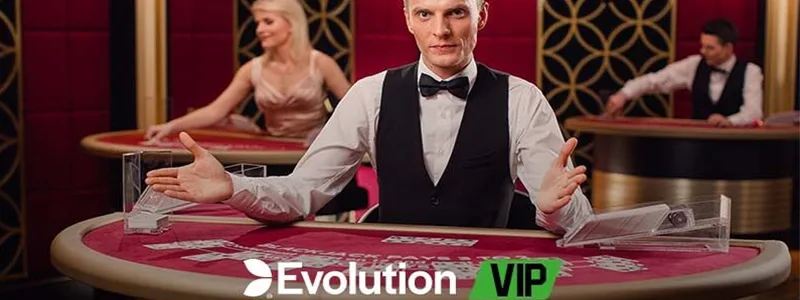
If you enjoy live dealer games, you probably know that Evolution Gaming is one of the largest providers of Live Casino solutions, catering to players with diverse preferences. VIP Blackjack is one of the greatest variations of the classic game that you can play for real money at Evolution casinos.
Typically, Evolution’s blackjack lobby offers multiple VIP Blackjack tables, each hosted by a different dealer and featuring varying bet limits to suit players’ budgets. Even so, the rules at every VIP Blackjack table remain the same. The minimum bet limit usually starts at €50 and goes up to €5,000.
The game is played with eight regular decks, and the dealer always stands on 17. Players can double on any two initial cards, but they cannot double after a split. You can split any pair, yet only one split per hand is allowed. After you split Aces, you will receive a single card for each hand. Players can take insurance if the dealer shows an Ace. This bet pays 2 to 1, and blackjack pays the standard 3 to 2. The game is a push when a player ties with the dealer.
Up to seven players can sit at the VIP Blackjack table, but if you are not seated, you can always use the Bet Behind option. It allows you to place wagers on a hand played by another participant.
In addition to the regular gameplay, VIP Blackjack lets you place side bets such as Perfect Pairs and 21+3. The Perfect Pairs wager wins when your first two cards form a pair. Three types of pairs award specific payouts. A perfect pair of the same suit pays 25 to 1, a colored pair of the same color pays 12 to 1, and the lowest payout of 6 to 1 is given for a mixed pair of different suits and colors.
You win the 21+3 side bet if your two initial cards and the dealer’s face-up card create certain combinations like Suited Trips, Straight Flush, Three of a Kind, Straight, or Flush. The respective payouts are 100 to 1, 40 to 1, 30 to 1, 10 to 1, and 5 to 1. The theoretical return of VIP Blackjack by Evolution is 99.29%, while the Perfect Pairs and 21+3 side bets have RTPs of 95.90% and 96.30% respectively.
VIP Blackjack Gameplay
2Infinite Free Bet Blackjack
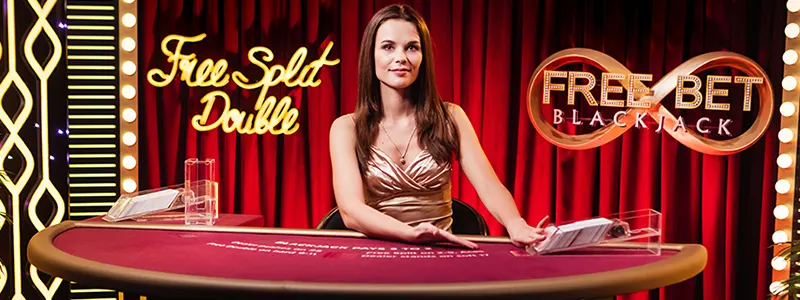
Infinite Free Bet Blackjack is another outstanding live dealer variation from Evolution. It is a revamped version of Infinite Blackjack, enhanced with the Free Bet option to make real money sessions even more rewarding. The table’s betting limits usually range between €1 and €1,000. Its standout features are the free double bets on hard 9, 10, and 11, along with free splits on any pair except 10s, Js, Qs, and Ks.
Beyond these perks, the game follows straightforward rules. It is played with eight standard 52-card decks, and an unlimited number of players can join each round. The dealer always stands on 17. A round is a push when the player ties with the dealer or when the dealer busts with 22.
Doubling is permitted on any two initial cards, and it is free on hard 9s, 10s, and 11s. As noted, splitting any pair except 10s, Js, Qs, and Ks is free, with only one split per hand allowed. After split Aces, each hand receives a single card. Doubling after a split is not available. If the dealer shows an Ace, players can take insurance, which pays 2 to 1 if it wins. Blackjack pays 3 to 2, and you can also win with a six-card hand worth 21 or less.
Infinite Free Bet Blackjack also offers optional side bets, which include Any Pair, 21+3, Hot 3, and Bust It. Any Pair wins when your first two cards form a pair of any suit or color, or when they form a suited pair. Just like in VIP Blackjack, the 21+3 side bet wins when your two cards plus the dealer’s face-up card create a qualifying combination. Hot 3 is similar, but you bet on certain totals or triple 7s. As the name implies, Bust It pays when the dealer busts, with the payout depending on the number of cards in the dealer’s busted hand.
The base game’s RTP, calculated on the first hand in the shoe, is 98.45%. The Any Pair, Hot 3, 21+3, and Bust It side bets have RTPs of 95.90%, 94.60%, 96.30%, and 94.12%, respectively.
Infinite Free Bet Blackjack Gameplay
3Power Blackjack

Power Blackjack is another excellent Evolution live dealer title for players who enjoy real money blackjack. The game’s highlight is the ability to double, triple, or even quadruple down on any two cards. It also features a unique rule where the dealer peeks for blackjack whenever their upcard is a J, Q, K, or Ace. While stake ranges vary by casino, the average betting limits at Power Blackjack tables are €1 to €1,000.
This variation is played with eight decks, but all 9s and 10s are removed. The dealer always stands on soft 17 and, as noted, checks for blackjack more frequently than usual. Players may double, triple, or quadruple on any two cards and may do so even after a split. You can split any two cards of equal value, with one split per hand allowed. Each Split Ace receives only one card.
If the dealer shows an Ace, players can take insurance, paying 2 to 1 if the dealer has blackjack. A player blackjack pays the customary 3 to 2. A hand is a push when the player’s and dealer’s totals are equal.
Like other Evolution blackjack tables, Power Blackjack supports the side bets Hot 3, 21+3, Any Pair, and Bust It. The winning conditions for these optional wagers mirror those found in Infinite Free Bet Blackjack and other Evolution titles that feature them.
The base game’s RTP, calculated on the first hand in the shoe, is 98.80%. Removing the 9s and 10s slightly adjusts the side bet returns, which stand at 96.58% for Any Pair, 96.09% for 21+3, 96.21% for Hot 3, and 94.71% for Bust It.
Power Blackjack Gameplay
4Lightning Blackjack
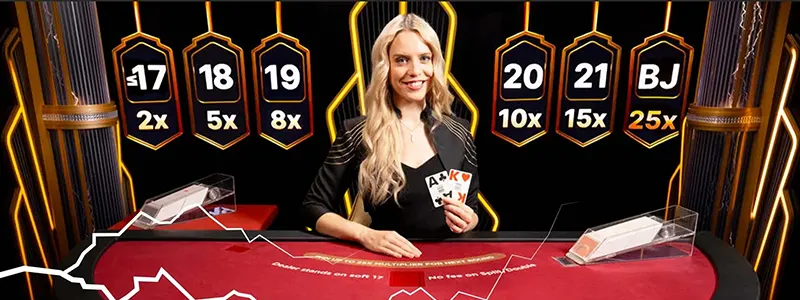
Evolution offers one of the largest selections of live blackjack variations, and Lightning Blackjack is among its most exciting options for real money play. This version features Evolution’s signature lightning multipliers. Bet limits start at €1 and climb to €2,500 per round.
The game is played with eight standard 52-card decks. The dealer always stands on soft 17 and checks for blackjack when showing an Ace. Players may double on any two initial cards and split any pair without additional fees. Only one split per hand is allowed, and you cannot double after a split. After splitting Aces, each Ace receives just one card.
If the dealer’s upcard is an Ace, players may take insurance, which pays 2 to 1 if the dealer hits blackjack. A player blackjack pays 3 to 2, but the lightning multipliers can boost the payout to as high as 25 to 1. A regular winning hand pays even money, or up to 25 to 1 when a multiplier applies. A round is a push when the player and dealer tie.
Lightning Blackjack includes a mandatory 100% Lightning fee, meaning your stake is doubled on every new hand. The minimum base bet is €1, and the maximum is €2,500. The fee is deducted automatically, and if the hand ends in a push you receive only your original stake back, not the fee. After bets close, random multipliers appear on screen, indicating the values that may apply to the next hand.
In each round, certain hand values between 4 and 17 or totals of 18, 19, 20, and 21 can carry multipliers ranging from 2x to 15x. Blackjack hands can receive multipliers of 6x to 25x. When you beat the dealer, you collect the multiplier attached to your winning hand, and it is stored for your next round of Lightning Blackjack.
If you win a multiplier but leave the game, you can return within 180 days and the multiplier will still be available for your next hand. Note that even if you raise your original stake and Lightning fee when the multiplier is applied, the payout is calculated based on the fee paid when the multiplier was won. The game’s base RTP is 99.56%, calculated on the first hand of the shoe.
Lightning Blackjack Gameplay
5Speed Blackjack

Players who want a fast-paced live dealer experience can try Evolution’s Speed Blackjack. The rules are conventional, but the accelerated pace lets you complete more hands in less time. Although Speed Blackjack has only seven seats, a Bet Behind option is available for observers, allowing them to wager on the seated players’ hands.
Speed Blackjack is offered in several variants with different bet limits and dealers, including VIP tables for high rollers.
After bets are placed, the dealer deals one card to each player, one to themselves, a second card to each player, and finally their hidden card. As soon as a player receives a second card, they may act. The dealer processes decisions in the order they are made, so the quickest players act first. Once all decisions are in, the dealer reveals their hole card and draws if they have less than 17. The game moves quickly, making it ideal for seasoned players who dislike long sessions.
This variant uses eight standard 52-card decks. The dealer stands on 17 and peeks for blackjack when showing an Ace. Players can double on any two initial cards but cannot double after a split. You may split any pair, limited to one split per hand, and split Aces receive only one card.
If the dealer’s upcard is an Ace, players can take insurance, which pays 2 to 1. A standard winning hand pays even money, while blackjack pays 3 to 2. A tie results in a push.
Although the table has seven seats, the Bet Behind feature lets unlimited additional players participate. Side bets Perfect Pairs and 21+3 are also available. The base game’s potential return is 99.29%.
Speed Blackjack Gameplay
6All Bets Blackjack

If you are searching for a thrilling online experience, consider All Bets Blackjack by Playtech. Like Evolution’s multi-side-bet tables, it lets you place several optional wagers while playing blackjack for real money, with one side bet paying up to 2,000 to 1.
The game uses eight standard 52-card decks and places no limit on the number of players who can join. Each participant receives a single hand that is played independently, so your outcome is unaffected by other players’ decisions.
The dealer hits on 16 and stands on soft 17. When the dealer’s upcard is an Ace, they check for blackjack, and players may take insurance at 2 to 1. A natural pays the usual 3 to 2. Players may double on any two initial cards and may split any pair, although only one split is allowed and doubling after a split is not. Split Aces each receive one card.
While the base game follows standard rules, the excitement comes from the variety of side bets.
Player/Dealer Pair is the first option, letting you wager that either the dealer or the player will draw a perfect, colored, or mixed pair. You can also bet on both sides drawing pairs. Payouts for a perfect, colored, and mixed pair are 25 to 1, 12 to 1, and 6 to 1, respectively.
The classic 21+3 side bet pays when your two cards and the dealer’s upcard form a Flush, Straight, Three of a Kind, Straight Flush, or Suited Three of a Kind, delivering 5 to 1, 10 to 1, 30 to 1, 40 to 1, and 100 to 1, respectively. Another option, Lucky Lucky, also evaluates your two cards plus the dealer’s upcard. Combinations such as a total of 19/20, suited 21, 678, 777, suited 678, and suited 777 return 2 to 1, 15 to 1, 25 to 1, 50 to 1, 100 to 1, and a hefty 200 to 1, respectively.
The Top 3 side bet completes the trio of wagers based on the player’s two cards and the dealer’s upcard. It pays 90 to 1 for Three of a Kind, 180 to 1 for a Straight Flush, and 270 to 1 for a Suited Three of a Kind.
The final side bet is Buster, which pays when the dealer busts. The payout scales with the number of cards in the bust, reaching 2,000 to 1 if the dealer busts with eight cards.
The main game RTP is 99.46%. Side bet returns are as follows: Pair bets – 95.9%, 21+3 – 96.3%, Lucky Lucky – 96.1%, Top 3 – 91%, and Buster – 93.83%.
All Bets Blackjack Gameplay
7Quantum Blackjack Plus

Quantum Blackjack Plus by Playtech is another engaging live blackjack variation for real money players. The limits for this table usually range between €/$5 and €/$2,000. Because the game deals a single hand that each player controls independently, an unlimited number of participants can join simultaneously. While the core rules mirror classic blackjack, random multipliers add an exciting twist.
Quantum Blackjack introduced multipliers to live blackjack, and in 2021 Playtech enhanced the concept with Quantum Blackjack Plus, making it an even more attractive version of the card game. This blackjack variant is played with six standard decks shuffled by an automatic shuffling machine. The dealer stands on soft 17 and peeks for blackjack when they draw a hole card.
A notable deviation from standard rules is that a player win turns into a push if the dealer busts with exactly three cards, unless the player’s hand includes one or more multiplier cards, in which case the hand still wins. Keep in mind that when there is a Multiplier win, players do not get their stake back. That means the maximum win you can enjoy if you have a 50x multiplier applied to your hand is actually 49 to 1. If you play with no multipliers, a winning hand pays even money and blackjack offers the standard 3 to 2 payout.
Each round, three to five cards are randomly selected and assigned multipliers ranging from 2.5x to 10x. Assuming the round selects five multiplier cards with a 10x multiplier and you are dealt all five, you could hold a cumulative multiplier of 50x. Multipliers are paid when the player beats the dealer or the dealer busts with three or more cards.
In the original version, multipliers multiplied together, producing very high values. In Quantum Blackjack Plus, the maximum multiplier is lower, but there are more multiplier cards each round, increasing your chances of triggering the feature.
Standard side bets such as Perfect Pairs and 21+3 are also available, paying the same rates as other Playtech blackjack tables. The RTP of the base game, including the multipliers, is 99.57%. The RTPs of the side bets Perfect Pairs and 21+3 are 93.89% and 95.38% respectively.
Quantum Blackjack Plus Gameplay
8ONE Blackjack
If you play at an online casino that offers Pragmatic Play Live games, you can choose from numerous blackjack tables. You can pick a dealer you like and select a table with limits that suit your bankroll. Among the options is ONE Blackjack, one of Pragmatic Play’s flagship Live Casino titles.
What sets ONE Blackjack apart is its unlimited seating. Thanks to the special software integrated into this game, each player receives the same initial two cards, yet every participant can make independent decisions thereafter. Betting limits run from €1 to €2,500, although some casinos may set different limits.
The game is played with eight standard 52-card decks that are automatically shuffled. The dealer draws to 16 and stands on all 17s. Doubling is allowed on any two initial cards, and only one card is dealt after a double. Doubling is not permitted on any later cards.
Any pair can be split, including Aces. After you split Aces, you cannot hit, so each hand receives one card only. When the dealer shows an Ace, players may take insurance, which pays 2 to 1. Blackjack pays the standard 3 to 2. Six Card Charlie is in effect, awarding an automatic win to any six-card hand totaling 21 or less. A tie results in a push. The base game’s theoretical return is 99.28%.
Side bets include 21+3, Perfect Pairs, Bust Bonus, and Crazy 7. The first two follow the same rules and payouts found in other blackjack games. Bust Bonus pays when the dealer busts, with higher payouts the more cards the dealer uses.
The distinctive side bet is Crazy 7, which pays for specific 7-based combinations. You can win with one 7, 7-7, Suited 7-7, Triple 7s, or Suited Triple 7s. Payouts are 5 to 1, 25 to 1, 150 to 1, 500 to 1, and 2,000 to 1, respectively.
ONE Blackjack Gameplay
9Mega Fire Blaze Blackjack

If you are looking for a fresh live blackjack experience, try Playtech’s Mega Fire Blaze Blackjack. The game combines standard Vegas-style blackjack with an exciting side bet. When the Mega Fire Blaze Bonus is activated, players can enjoy win multipliers ranging from 1x to 1,000x.
This is another unlimited-seat version, so any number of players can join. Instead of one hand, however, this table features two hands, and you can choose to play either or both. It uses eight standard 52-card decks shuffled automatically. The dealer hits on 16, stands on 17, and checks for blackjack when showing an Ace.
If the dealer’s upcard is an Ace, players may take insurance, paying 2 to 1. Blackjack pays the standard 3 to 2. Other base-game rules are equally familiar: you can double on any two initial cards, split any pair (including Aces), and double after a split. Re-splitting is not allowed, and a split Ace receives only one card.
Traditional side bets like Perfect Pairs and 21+3 are available, paying the usual rates. The base game itself is easy to grasp.
The Mega Fire Blaze side bet, however, needs some explanation. It is optional, and you may wager any amount in the Mega Fire Blaze area on the betting grid. When the bonus round is triggered, anyone who placed the side bet qualifies for the Mega Fire Blaze Bonus payout. Entry to the bonus round is determined by a points system: certain cards dealt to the dealer or to either player hand award points, and you need at least five points to trigger the bonus.
Points accumulate regardless of whether you play one or both hands. Various player totals and dealer upcards award the points needed. The bonus round has five tiers: Minor, Mini, Major, Grand, and Mega, unlocked by collecting 5, 10, 15, 20, and 25 points, respectively.
During the bonus game, a grid appears behind the dealer, and you receive three spins to land random multipliers. Each time a multiplier lands, the spin counter resets to three. The round ends when no new multipliers land or the grid fills completely. Filling columns can also award special random multipliers, and higher tiers yield larger potential returns.
Although the bonus grid may look complex, the user interface keeps track of your progress, letting you focus on the base game. The base game RTP is 99.55%, while the RTPs for the Mega Fire Blaze Bonus, Perfect Pairs, and 21+3 side bets are 97.47%, 95.9%, and 96.3%, respectively.
10Super Stake Blackjack
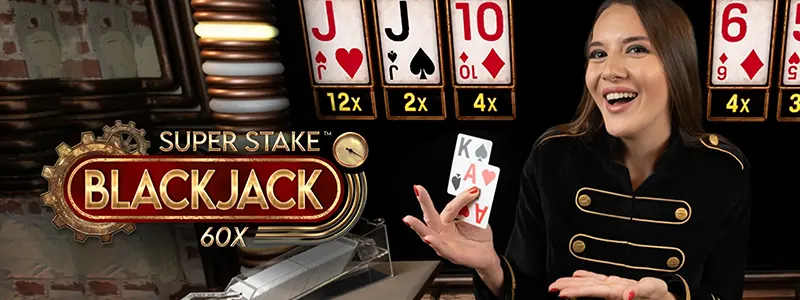
When you want to play blackjack for real money, consider StakeLogic’s Super Stake Blackjack, a live dealer game that can be both entertaining and rewarding. Like several variations reviewed above, it lets you play standard blackjack while adding generous multipliers to your wins.
At first glance, the base game follows standard rules, paying even money for a winning hand, 3 to 2 for blackjack, and 2 to 1 on insurance. Note, however, that every round carries a mandatory 50% Super Stake fee. For example, if you bet €/$2, your total wager is €/$3, and payouts are calculated only on the €/$2 base stake. A winning hand therefore pays €/$4 instead of €/$6, and blackjack pays €/$5 instead of €/$7.50.
Unlike tables with limited seats, Super Stake Blackjack accepts an unlimited number of players, each managing the hand independently. While you decide whether to split or double, standing and hitting decisions follow Basic Blackjack Strategy automatically.
The game uses eight 52-card decks. A cutting card is placed after the fourth deck, signaling a shoe change. The dealer hits on 16 and stands on all 17s. Double Down and Split are available, and split Aces receive only one card.
Random multipliers are the game’s main attraction. After bets are placed, six Golden cards appear on a screen behind the dealer, each bearing a multiplier of up to 60x. If any of these cards are dealt to you in the initial hand, the multiplier applies to your stake. Cards drawn after a hit or double do not count.
Multipliers apply only to the original stake. Suppose you bet €/$2, receive a Golden card with a 10x multiplier, and decide to double. Your stake rises to €/$4, but the 10x multiplier still applies only to the original €/$2. If the hand wins, you collect €/$28, of which €/$20 comes from the multiplied base stake and €/$8 from the even money return on the doubled portion.
The four side bets are Golden Pairs, 3, Golden 3, and Buzz-T. Golden Pairs mirrors the Perfect Pairs wager, paying 25 to 1 for a Suited Pair, 12 to 1 for a Colored Pair, and 6 to 1 for a Mixed Pair.
The 3 side bet is the standard 21+3 wager, paying 100 to 1 for a Suited Three of a Kind, 40 to 1 for a Straight Flush, 30 to 1 for a Three of a Kind, 10 to 1 for a Straight, and 5 to 1 for a Flush. Golden 3 is similar but pays only for Suited Three of a Kind, Straight Flush, and Three of a Kind, with higher returns of 270 to 1, 180 to 1, and 90 to 1, respectively.
Buzz-T pays when the dealer busts, with payouts increasing as the dealer draws more cards. The top return is 250 to 1 for a bust with eight or more cards.
Because the mandatory fee is never returned, the base game’s effective RTP is 98.01%. The chance of landing a Golden card with a multiplier compensates for the lower theoretical return.
Super Stake Blackjack Gameplay
Blackjack FAQ
Is blackjack a game of chance?
The short answer is no, blackjack is not based merely on luck. Of course, a certain amount of luck is involved in any card game, blackjack included, as the outcome of a hand is always affected by the cards one is dealt. Even the most skilled players have no influence over what cards they receive from the dealer unless cheating is at hand.
In blackjack, the outcomes of previous hands can affect those that follow. The element of luck can be further reduced if players make the optimal decisions in all hands, which increases their overall expected return.
Is blackjack a beatable game?
Yes, blackjack is among the few casino offerings where players have a significant chance of beating the house at its own game. Dice and roulette wheels may not have a memory, but the same cannot be said about the cards in a blackjack shoe. The cards that are dealt in previous rounds can influence the odds for both players and dealers in subsequent rounds. In other words, the odds change with every hand played at the table.
A shoe rich in high cards works to the advantage of the player, while low cards benefit the dealers. Skilled professionals know how to exploit the richness of a shoe to their advantage, but recreational players can also reduce their long-term losses with perfect basic strategy.
Do the bad decisions of other players affect the odds for me?
This is a widespread myth among inexperienced players who fail to recognize the impact of variance in blackjack. The truth is that bad players are the very reason why blackjack is still offered in casinos, because if everyone’s play were perfect, the house would not be able to generate profits from its blackjack tables.
Since it is impossible to know the order of the undealt cards in advance, one cannot say for certain whether a fellow player’s poor decision will have a positive or negative impact on any given round. A bad player’s hit is just as likely to help you as it is to hurt you.
What is better – single-deck or multiple-deck blackjack?
Multi-deck games are known to give the house a slightly bigger edge over blackjack players. This can be attributed to the effect of card removal throughout the course of a game. In single-deck blackjack, removing one card from the deck has a much bigger impact on the game than removing one card from a shoe containing eight decks, for instance. It is also more difficult for card counters to keep track of the cards in multiple-deck games. However, many professional players prefer to engage in shoe games because these normally offer better rules and payouts as opposed to the majority of single-deck tables, where a natural returns 6 to 5 instead of 3 to 2.