

The global social gambling market saw tremendous growth over the past decade, with gross gaming revenue of $6.2 billion in 2020. Projections indicate that this figure will increase even further in the coming years.
This form of gaming is steadily gaining traction because it provides a social and highly enjoyable experience while eliminating many of the risks associated with conventional online casinos. Some people choose social over real-money online gambling because it stimulates them mentally and helps them de-stress without the possibility of suffering huge losses.
Today, we examine the differences between these two forms of gambling and explore the reasons behind their popularity. Hopefully, by the end of this article, you will be able to decide which type of online casino is the best fit for you.
How Social Casinos Work
 The term ‘social gaming’ typically refers to online games that enable players to interact with one another. The category comprises multiplayer board games, card games, interactive video games, and, of course, casino games. Players can usually access them directly in a browser or via downloadable mobile applications.
Another option is to launch them on social networking platforms such as Facebook. Either way, getting started with social casinos is extremely simple. Here are the steps we followed to launch the popular social gambling app Slotomania, developed by Playtika.
How to Play Slotomania?
1
We navigated to the Google Play Store, but there is also an iOS-compatible version that you can download from Apple’s App Store.
2
Then we typed “social casino” in the search bar, and Slotomania was among the first results we found.
3
After we installed and launched Slotomania, the app prompted us to sign in with Facebook, but playing as a guest is also possible.

4
If you connect the app to Facebook, you can share your results with friends, invite them to join the gameplay, or send them gifts. You also receive a gift for each friend you invite to Slotomania.
5
Then we claimed the daily bonus, which consisted of the app’s hard currency, namely free coins to play with. There is no need to deposit real money at social casinos like Slotomania.
You play with virtual coins, and your winnings or losses are immediately reflected in your balance. Players can also collect the app’s soft currency in the form of gems, which they can use to unlock various exclusive features.
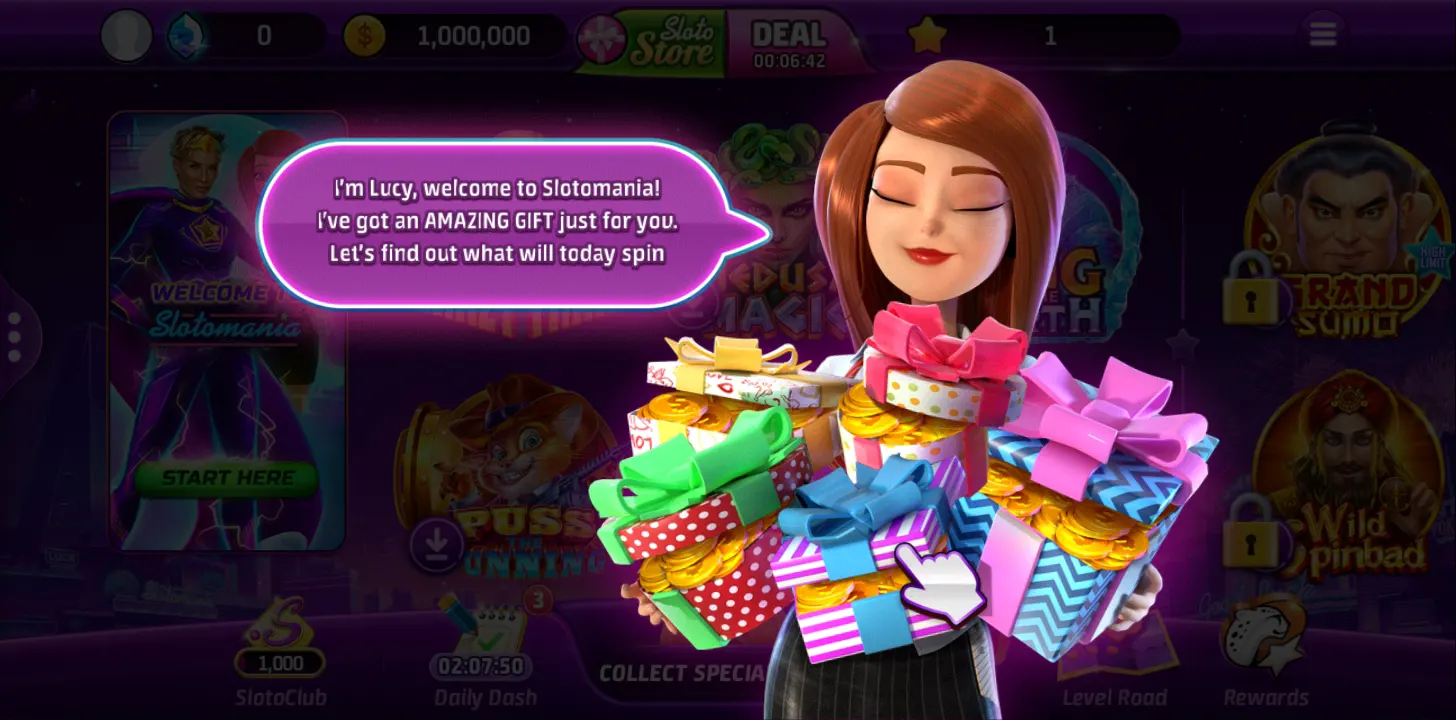
6
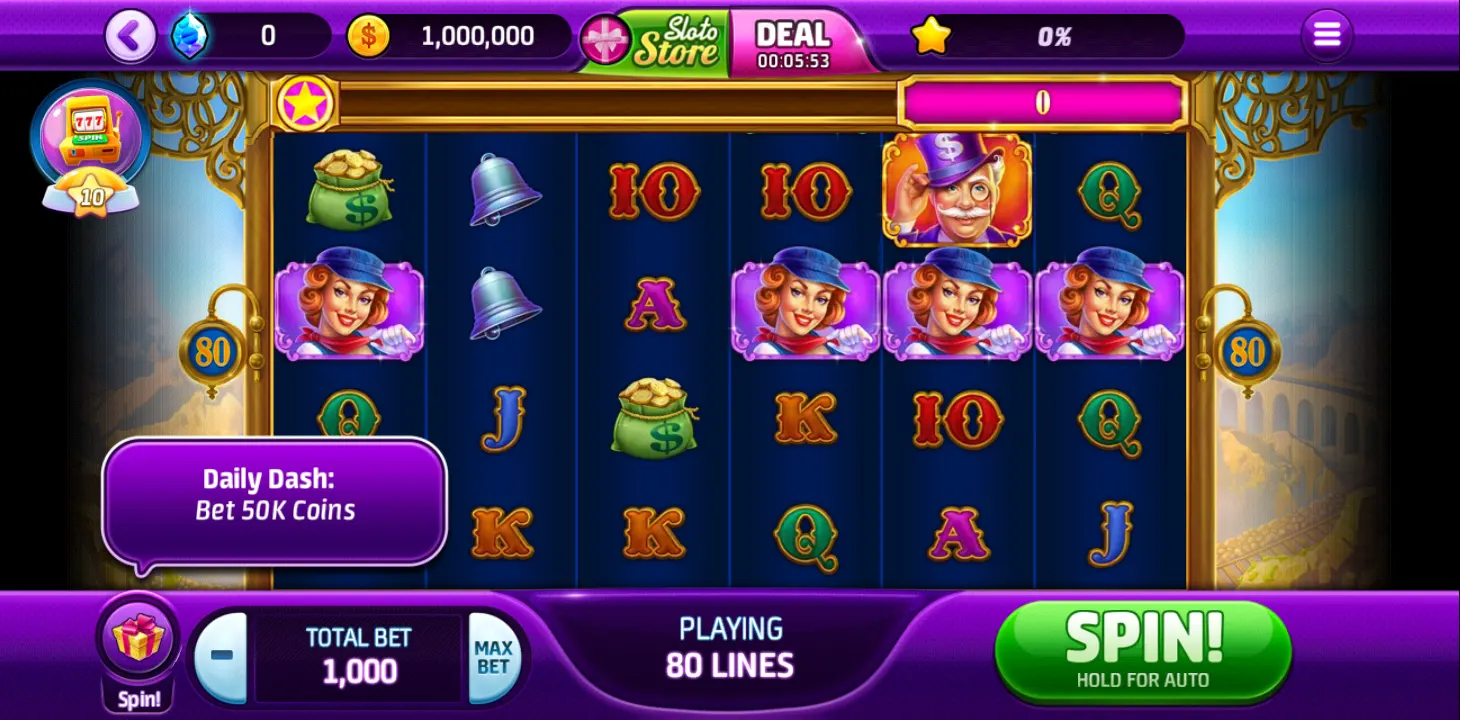
Finally, we navigated to the main lobby, where we selected the Crazy Train slot. As you can see, it plays exactly like a regular slot at a real-money online casino. The only difference is that you cannot withdraw any winnings from your balance.
7
Slotomania obviously features slots only, but other social gambling apps offer more casino games, including blackjack, baccarat, roulette, and video poker.
Forms of Social Interaction at Social Casinos
 As you can see, most social casino games involve greater player interaction, which is not always the case with their real-money counterparts (live dealer tables are the only exception). This interaction comes in various forms, including the following:
How Social Casino Game Publishers Generate Revenue
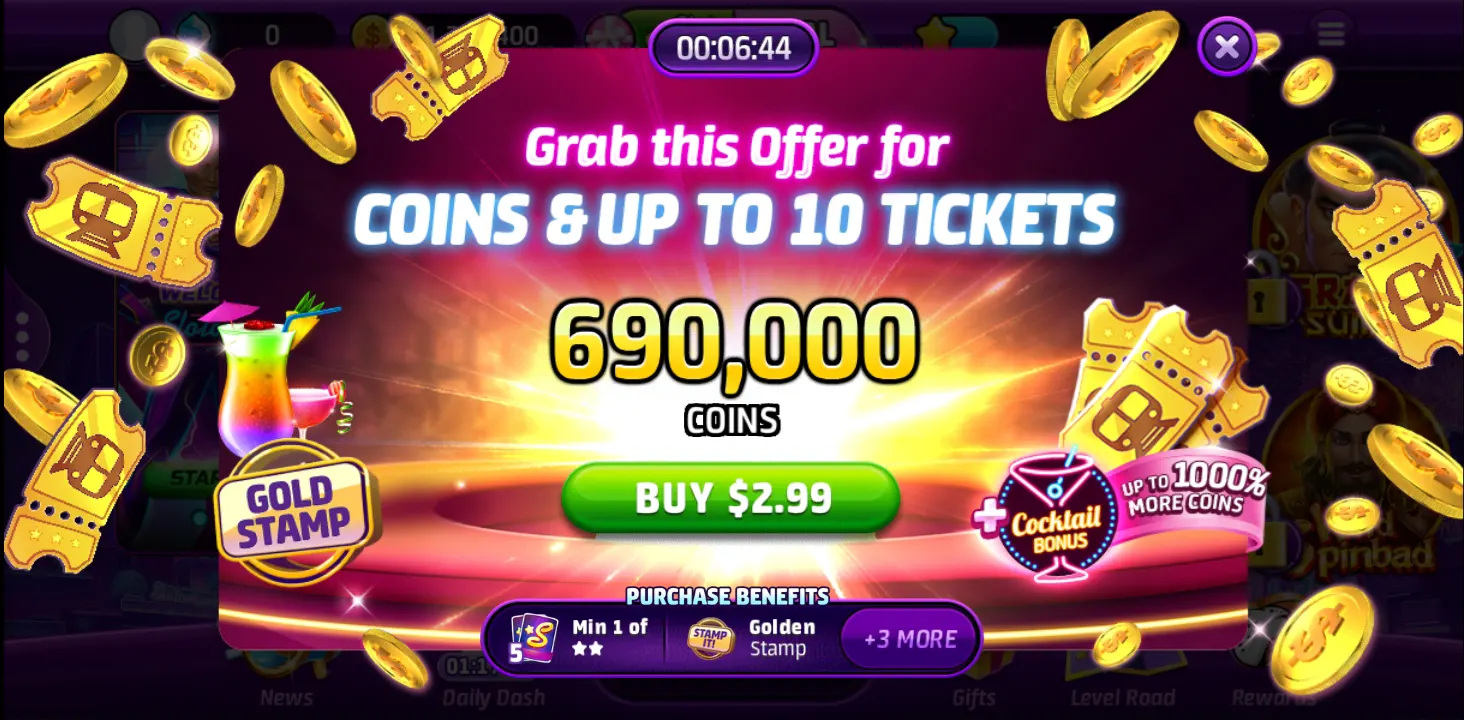
Social casino games are free to install and play, which naturally raises the question of how their publishers make money. In real-money casino games, gambling operators hold a statistical advantage over players that guarantees they collect a percentage of the total amount wagered. That is not the case with social casino games, whose publishers generally remain profitable in the following ways.
 In-App Purchases (IAP)
 In-Game Advertising
 Product Placement
 White Label Solutions
Popular Social Gambling Platforms
Players who want to enjoy quality social casino gaming can hardly complain about a lack of options. Hundreds of social casino games are available for desktop and mobile play, including slots, video poker, and table classics like roulette and blackjack.
Let’s look at the most popular platforms for social gambling, where you can play with virtual credits instead of risking real money.
 DoubleDown Casino Vegas Slots
 Slotomania
 Big Fish Casino
 Zynga Poker Texas Hold’em
 House of Fun
Social vs. Real-Money Casinos – the Pros and Cons of Both
 Both social and real-money casinos have their fair share of pros and cons. You should carefully weigh the advantages and disadvantages to determine which form of gambling is the better fit for you. Let’s start with social casinos.
The Pros and Cons of Social Casinos


The Pros and Cons of Real-Money Casinos
So Which Should You Choose?
 So, should you choose social casinos or opt for real-money gambling? It is up to you to answer this question, as it ultimately depends on the kind of player you are. Social gaming is great for players with low risk tolerance who want to socialize and have some fun without spending any money in the process.
On the other hand, if you are looking to win cash and have the guts (and the budget) to stomach potential losses, perhaps you should consider giving real-money online casinos a try. Just make sure you choose a reliable operator you can trust with your money and sensitive information.