
The US legal betting landscape is closely connected to the history of gambling in the country itself. Games of chance reached the US colonies when the first European settlers arrived in the New World. Public attitudes toward such activities varied significantly from one community to another, but at the time the country lacked any large-scale restrictions on gambling.
During the late 18th and early 19th centuries, lotteries were commonly operated as a means of raising additional revenue to fund various educational institutions, such as schools and universities. Gambling gradually spread throughout the entire country, with cities like New Orleans and San Francisco becoming major hotbeds for such practices. The vigorous growth unexpectedly came to a halt when gambling was uniformly prohibited across the United States.
Nevada’s Anti-Gambling Bill of 1909
 Nevada may be considered the gambling mecca of the world, but gaming activities have not always enjoyed a legal status in the Silver State. All forms of gambling were first prohibited in 1861, before Nevada was even a state.
Several years later, in 1869, Nevada lawmakers passed a new law that legalized gambling and introduced the first licensing fees for such activities. This made Nevada the only state in the country with legal gambling.
Several legislative amendments took place in the decades to follow, many of which concerned the distribution of licensing fees. In 1907, it was decided that all gambling-related fees, bar those for slot machines, would be retained by the counties. Meanwhile, the fees from slots were redistributed to the Silver State’s coffers.
Unfortunately, these favorable amendments were short-lived. Two years later, in 1909, the Reno Gazette Journal reported the state’s lawmakers had approved an anti-gambling bill that effectively outlawed all forms of gambling in Nevada.
Despite the efforts of gambling proponents to kill it with various amendments, the bill passed the Assembly with 27 votes “for” and 20 votes “against.” The ban officially took effect on October 1st, 1910.
Six years later, the local authorities reintroduced legal low-stakes gambling activities where the prizes were soft drinks, chewing gum, cigars, and monetary payouts of $2 or less. Illegal gambling for considerably higher stakes became rampant throughout the country.
The Wide-Open Gambling Bill Reintroduces Legal Gaming in Nevada
 The following decades were marked by two important historical events that helped reshape the United States’ legal gambling landscape. The year 1929 saw a collapse in New York Stock Exchange share prices, signaling the beginning of what became known as the Great Depression, a period of high unemployment rates and severe global economic decline.
Then there was the construction of the Hoover Dam (called Boulder Dam at the time), which commenced two years later. This was a massive project that called for significant financing. Legislators renewed their efforts to reintroduce legal gambling in the Silver State as a means of funding the construction.
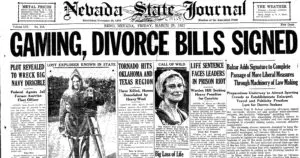
Young assemblyman Phil Tobin from Humboldt County proposed a new piece of legislation called Assembly Bill 98. This law was actually authored by another lawmaker, but he was too afraid to propose it himself because he feared it would damage his political career.
March 19th, 1931 became a historic day as it saw the official signing of Assembly Bill 98 into law. The legislation was approved by Nevada’s Governor Fred Balzar and effectively ushered in a new era of wide-open gambling in the state.
Assembly Bill 98 covered a broad spectrum of gambling games, including slot machines, blackjack, stud and draw poker, roulette, faro, monte, and keno. The law outlined new licensing fees for authorized gambling operators, designated penalties for violators, and prohibited “minors from playing and loitering about (casino) games.”
It stated that no individual in the Silver State was “permitted to deal, operate, carry on, conduct, maintain, or expose for play” any of the above-listed games “without having first procured a license” for offering these activities. Section 1 of Assembly Bill 98 also sheds light on who could apply for a gambling license, stating that “no alien, or any person except a citizen of the United States, shall be issued a license“.
In 1945, the Nevada Tax Commission was charged with oversight of gambling licenses at the state level. It had the power to audit gaming operators and enforce compliance with the law. The Nevada Gaming Control Board was established in 1955 to assist the Tax Commission with various enforcement and licensing issues.
The local gaming industry’s association with organized crime syndicates strengthened in the following years. As a result, Governor Grant Sawyer pressured the state’s legislature into establishing a new gaming regulatory body, the Nevada Gaming Commission. This led to the introduction of Nevada’s current two-tier regulatory system. The Gaming Control Board acts as a full-time regulator, while the Gaming Commission assumes a part-time regulatory role.
Legal Casino Gaming Arrives to Atlantic City
 In the decades following legalization, the gambling scene truly exploded in the Silver State, with investors such as Howard Hughes recognizing the enormous profit potential of this industry. The state of New Jersey decided to follow suit and legalize gambling in response to this immense success.
New Jersey’s residents were initially averse to the idea, but in 1976, they eventually voted in favor of legal casino gaming with a majority of 56 percent. It was decided, however, to restrict betting activities to the territory of Atlantic City only.
The New Jersey Casino Control Commission was established in 1977 under the Casino Control Act, which authorized the provision of roulette, blackjack, craps, baccarat, slots, red dog, sic bo, mini-baccarat, pai gow poker, and “any variations or composites of such games, provided that (they) are found by the division suitable for use after an appropriate test or experimental period“. The Casino Control Commission was tasked with overseeing and licensing authorized gambling operators in Atlantic City.
The Casino Control Act underwent various amendments over the years. In November 2010, New Jersey Senators Raymond Lesniak and James Whelan introduced a new piece of legislation, Senate Bill S12, which deregulated the local gambling industry and transferred day-to-day supervisory functions from the Control Commission to the state Division of Gaming Enforcement.
Senate Bill S12 was signed into law by then-Governor Chris Christie at the beginning of February 2011. This transferred responsibility for licensing local casino operators to the Division of Gaming Enforcement, along with the task of handling customer complaints. The regulator is also expected to undertake audits of licensed casino businesses and maintain a list of excluded customers.
The legislation outlines the criteria casino hotels must meet to receive licenses. The building should contain at least 500 sleeping units, while the gaming floor may have a maximum area of 60,000 sq ft.
Exceptions were made for every 100 sleeping units above 500, which increased the allowed footage by 10,000 sq ft, up to a ceiling of 200,000 sq ft of gaming floor space. Providing casino gambling services without a valid license is deemed unlawful and subject to fines ranging from $50,000 to $200,000, depending on the exact circumstances.
Indian Casino Gambling Regulations
 Legal casino gambling eventually expanded outside Nevada and Atlantic City, largely thanks to a federal law that enabled Native Americans to operate games of chance within the territory of their reservations. It all started in the 1970s when the Seminole Tribe of Florida decided to build a high-stakes bingo hall on its Broward County reservation.
The trouble was that the hall did not comply with Florida’s state law, which stipulated bingo halls could operate no more than two days per week and pay out maximum jackpots of no more than $100. By contrast, the Seminoles’ bingo hall operated six days a week, and its maximum prizes went far beyond the legally allowed limit.
The situation escalated to such an extent that the tribe took the matter to the District Court, insisting it had sovereign rights over its reservation. Those rights were granted by the federal government and could not be interfered with by the state government. The District Court ruled in favor of the Seminoles, and their bingo hall subsequently reopened in December 1979.
The Seminoles’ victory gave birth to modern commercial Indian gaming in the United States. These events eventually led to the enactment of the Indian Gaming Regulatory Act (IGRA) of 1988, signed by President Reagan.
IGRA gave Native American tribes the exclusive right to conduct and regulate gambling activities within their reservations as long as those activities were not in violation of federal law. Of course, the tribes could operate gambling businesses only in US states that do not prohibit such activities.
The passage of IGRA led to the creation of the National Indian Gaming Commission, responsible for regulating high-stakes gambling in tribal reservations. The body is governed by a chairperson appointed by the President of the US, along with two other full-time members selected by the Secretary of the Interior. All three are vetted by the Attorney General before they are officially appointed.
Under the provisions of IGRA, the tribes can offer three classes of gaming. Class I includes social games with minimal-value prizes. Class II comprises games of chance like bingo, while Class III groups together games such as blackjack, craps, roulette, slots, chemin de fer, and baccarat.
The Arrival of Regulated Riverboat Casinos
 An interesting phenomenon one is unlikely to see outside the US is the so-called riverboat casino. This type of gambling “establishment” was authorized in the early 1990s in several US states that had frontage on the Mississippi River and its tributaries, including Mississippi, Louisiana, Indiana, Missouri, and Illinois.
Illinois was among the first states to legalize riverboat casinos in February 1990, with the passage of the Riverboat Gambling Act. This legislation also led to the creation of the Illinois Gaming Board, responsible for the licensing and regulation of gambling boats. Licenses were initially granted to ten vessels on condition they cruised the river waters while gaming took place on their premises.
This requirement was invalidated after Illinois Governor George Ryan amended the Act in May 1999. The change essentially transformed the riverboats into dockside gambling halls. All license applicants were expected to contribute a fee of $50,000 to cover the expenses associated with the investigations carried out by the state regulator before a license was issued.
Should the costs exceed this amount, the applicant must pay the extra sum. Licensees are also required to “specify the place where (their) riverboats shall operate and dock“. The first ten licenses granted by the regulator expired after three years but were renewable after applicants repaid the necessary fees.
Licensed riverboats could welcome no more than 1,200 patrons at a time. Equipment used to conduct gambling activities must be purchased or leased from suppliers licensed under the Riverboat Gambling Act.
Only individuals 21 years of age are permitted in areas where gambling activities take place. As for the games allowed on board, these include baccarat, poker, roulette, twenty-one, slots, keno, and faro for Illinois riverboat casinos. Note that each state has passed individual laws that govern these activities, so the exact requirements in Louisiana, for example, may differ from those in Illinois.
US States with Legal Forms of Online Gambling
After PASPA was overturned by the Supreme Court in May 2018, legal online sports betting became a reality in several US states, and more are expected to follow in the near future. Some states have already passed laws to authorize such activities, while others are still drafting their sports betting bills.
That said, certain forms of online gambling may be legal in a given state, whereas others remain prohibited. Operators must obtain authorization from the respective state regulators before they can offer their services online. Below, we list some US states where online gambling is permitted, along with the activities residents can enjoy.
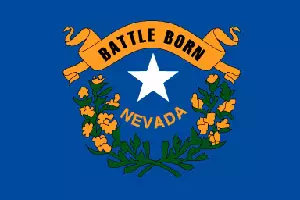 Nevada
 New Jersey
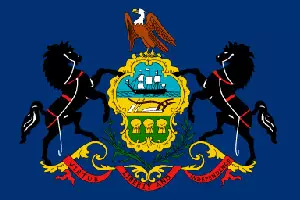 Pennsylvania
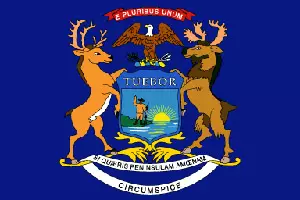 Michigan
 Delaware
 West Virginia